Val di Cecina — Tuscany — Since the Middle Ages
Five centuries
of a hilltop
village.
From Leonardo's map of 1503 to the bread ovens still standing today - the long, quiet story of Gello.
Chapter I
The name, the hill,
the ancient field.
The dominant position of Gello on its hilltop, and the circular arrangement of its buildings, leave little doubt: this settlement was born centuries before any written record of it. The etymology of the name itself whispers of deep roots - Gello derives from Agellum, the Latin diminutive for ager, meaning field, or little field. It is a name shared by two other Tuscan villages, and each time it hints at the same ancient relationship between a community and the land it worked.
The town was certainly already established during the Middle Ages. Its hilltop position - commanding wide views across the Val di Cecina, with the Metalliferous Hills to the south and the sea glinting twenty kilometres to the west - made it both defensible and practically positioned between the valley floor and the higher terraces above.
The actual buildings are the result of layer upon layer of demolitions and reconstructions over the centuries, each time reusing the mixed local stones of the area: the pale white alabaster that characterises this part of Tuscany, cut into lintels and architraves; the rougher dark stone packed into the thick exterior walls; terracotta tiles laid in the Tuscan tradition with their slow, organic curves.
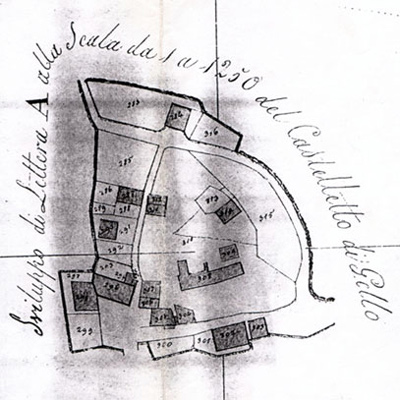
The land registry of the Comunità di Montecatini Valdicecina, drawn up in 1821, records the "Castelletto di Gello" in a configuration slightly different from what stands today: a few more buildings than are currently standing, without the arch, and with a different arrangement of the rectory house. The village was already in the slow process of contraction that would accelerate a century later.
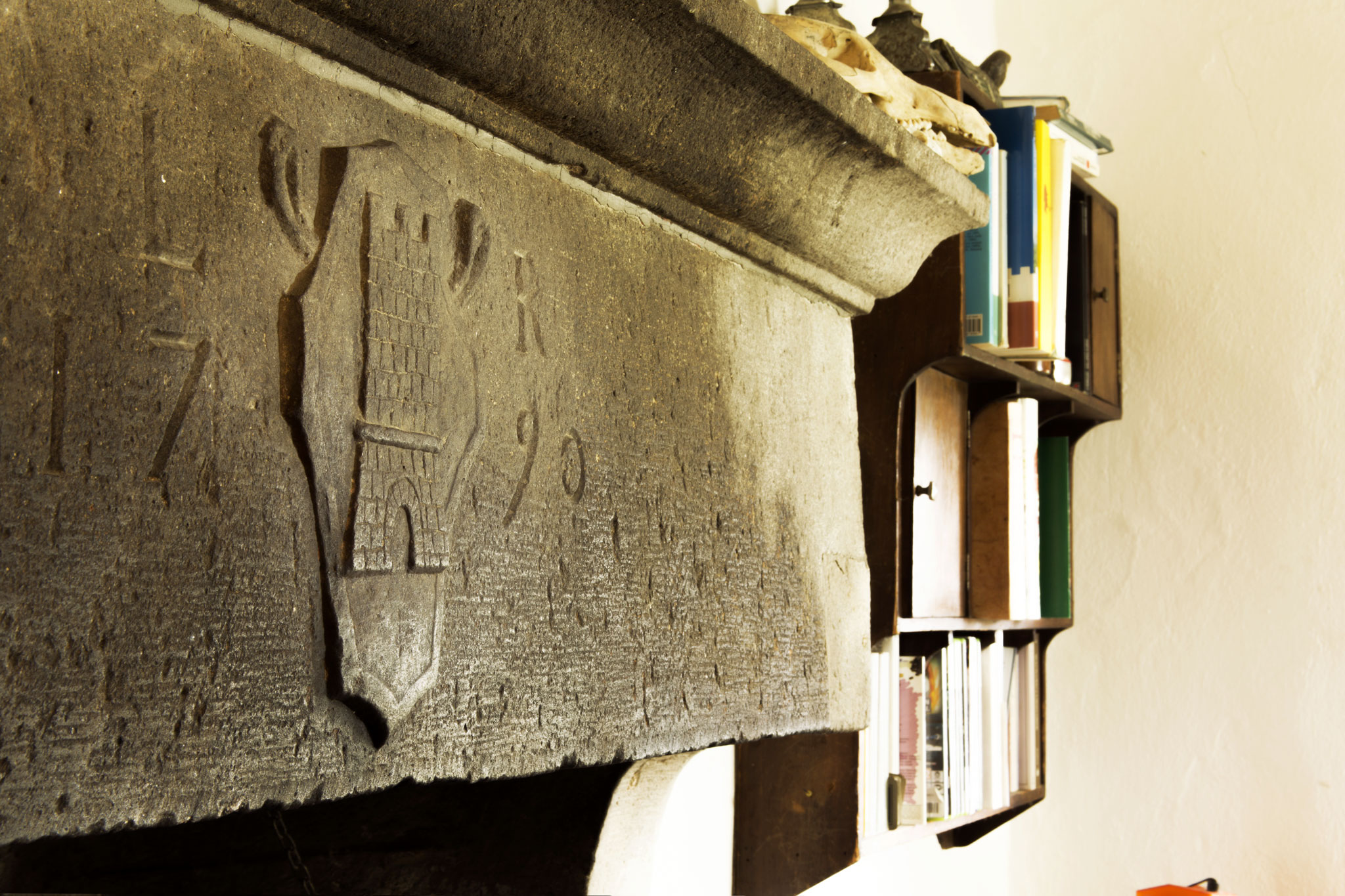
Only one building carries a confirmed date: Casa dell'Arco, whose fireplace bears the emblem of La Rocchetta and the year 1790. Everything else belongs to the unwritten timeline of stone and necessity.
Chapter II
Drawn by Leonardo,
in 1503.
In 1503, Leonardo da Vinci was engaged in one of the most ambitious cartographic surveys of his time - a hydrological and territorial study of the Arno and its tributaries, part of a scheme to redirect the river. His map of the Val di Cecina (Windsor Royal Library 12683) is one of the earliest accurate aerial-style depictions of this part of Tuscany, and among the towns clearly marked on it is Gello.
The names of the surrounding towns on Leonardo's map have remained almost unchanged across five centuries, and Gello sits among them, its position on the hill faithfully rendered. That a village this small - never a seat of power, never a commercial centre - should appear on one of history's greatest draughtsman's surveys is a measure both of the precision of his work and of Gello's stubborn, visible presence on the landscape.
"The first map it appears on is a Val di Cecina survey drawn by Leonardo da Vinci in 1503, where Gello is clearly mentioned among cities whose names have remained almost unchanged."- from the historical notes on Gello
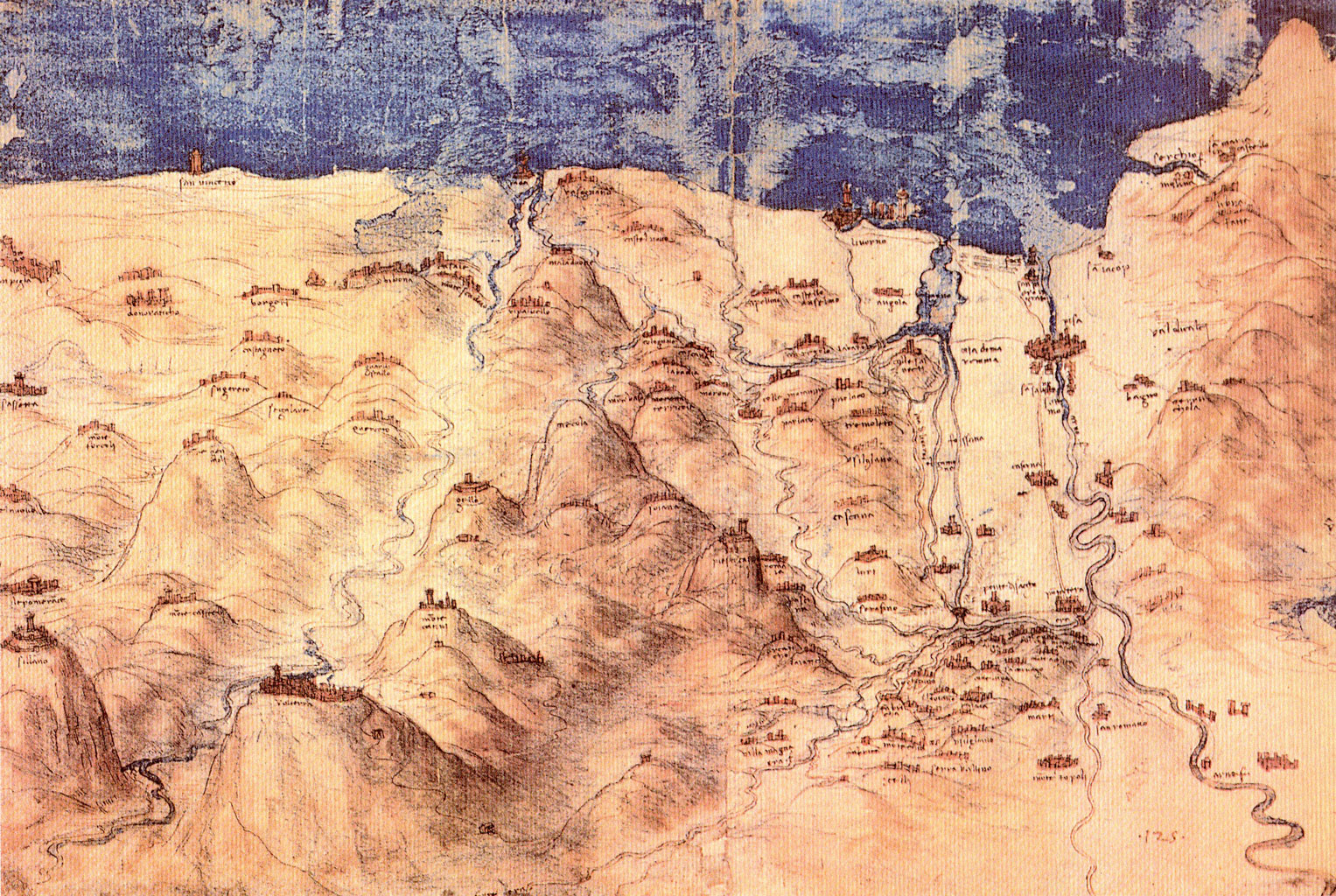
Leonardo's map was not simply decorative: it was functional, military, agricultural. He was studying the flow of water through the valley, the possibility of canals, the relationship between terrain and settlement. That Gello was worth marking tells us it was a visible, inhabited, working place - with fields, families, and stone buildings substantial enough to register on a survey intended for the eyes of patrons and engineers.
More than five hundred years later, those stone buildings are still standing.
Chapter III
A hundred people,
three bread ovens.
In the years after the Second World War, Gello was a full, working village. Twelve families lived among its stone houses - alongside the rectory house and its inhabitants - for a total of roughly one hundred people. The hamlet had everything it needed: three communal bread ovens, still used regularly; a rain-water cistern fed by the rooftop gutters; and, at the foot of the hill, the Spring del Cucule, from which drinking water was carried up by hand.
The houses faced inward and outward at once - private interiors opening room by room without corridors, as was typical of rural Tuscan construction; and exterior walls washed in the bright colours that traces beneath the surviving rain gutters still attest to. Ochres and terracottas, pale greens and earth-toned whites: the village was not the soft grey-stone hamlet that romantic imagination projects onto old Tuscany, but a lively, coloured place.
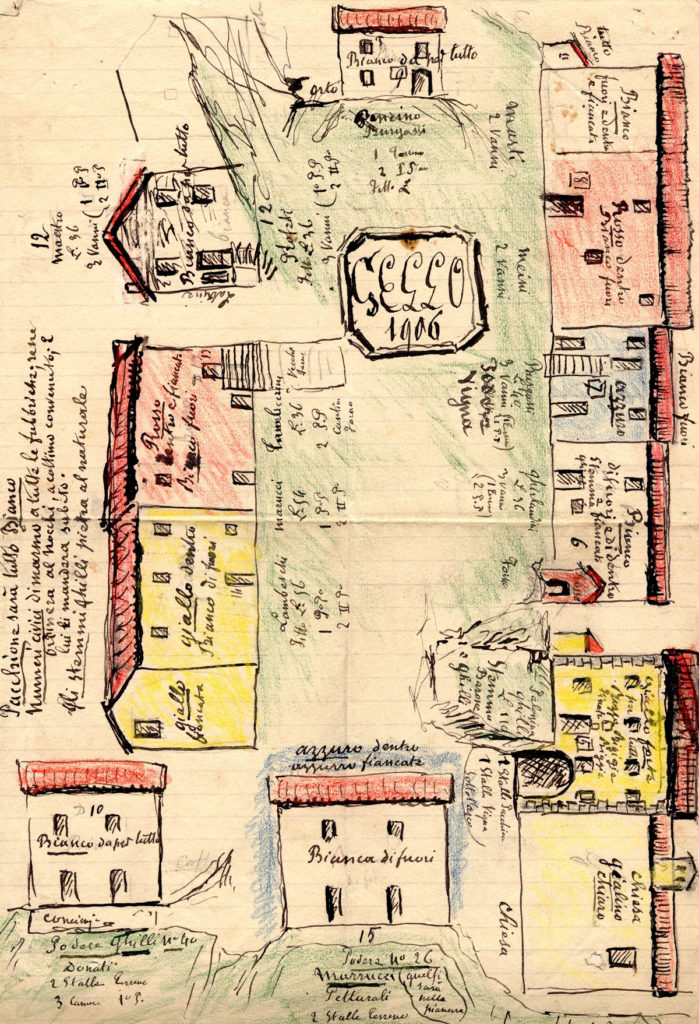
A remarkable survival from this period is a technical drawing dated 1906: a facade colouring project, showing the proposed pigment scheme for the exterior walls of the village. The drawing testifies to the care taken with the visual character of the hamlet even into the early twentieth century - an aesthetic intentionality we have tried to honour in the restoration.
The three bread ovens are still standing. The cistern still holds water. In this sense, the village has changed less than its century of abandonment might suggest.
Chapter IV
Recorded on film,
1953.
In the early 1950s, a short film was commissioned to record the agricultural reclamation of the Val di Cecina. Entitled Conquistare la Terra - "Conquering the Land" - it documents the immense human and mechanical effort required to reclaim 70,000 hectares of land rendered hostile by centuries of clayey, waterlogged soil: regulating rivers, digging canals, breaking and levelling ground, replacing wooden bridges with stone and concrete.
Gello is used at the 00:21 mark as a symbol of the difficult living conditions that made radical intervention urgent. The narration is precise in its bleakness: near Gello, water stagnates and takes on "the vices of clay". The people inhabit "small, desolate hamlets" where time has stood still. The streets and alleys are lit only by faint flames and, the narrator adds, "the resigned smiles of the children".
The film is, in the most literal sense, the last moving image of Gello as a working village. Within a decade, the families had left.
"Conquistare la Terra" - documentary newsreel, c. 1953. The houses of Gello appear in the sequence beginning at 0:21.
Chapter V
The silence
after 1963.
The end came quietly, as it did for so many Italian hill villages in the postwar decades. During the 1950s, the agricultural reforms that swept through central Italy separated the Gello farm from the surrounding terrain, redistributing it to local families. Without the fields, without the sharecropping system that had tied people to the land, the economic rationale for living on the hill dissolved. One by one, the families moved to the valley towns and the cities.
By 1963, the village was empty. In that year, the entire hamlet - all seven houses, the church, the bread ovens, the cistern, the land around it - was purchased in its entirety by the current owners.
What they inherited was a village that had been lived in, continuously, for centuries, and then suddenly, completely, left. The doors had been closed and not reopened. Inside, the original floors were intact. The chestnut beams held the roofs. The alabaster lintels stood undisturbed above doorways that had not been passed through in years.
"In 1963, the entire village was purchased by the current owners. They spent decades restoring it in the most non-invasive way possible."- History of Gello
Chapter VI
Restored, not
rebuilt.
The guiding principle of every decision since 1963 has been non-invasion. The problems posed by renovating buildings while respecting the architecture of rural Tuscany were dealt with by reusing what was already there - not by replacing it.
The original terracotta floors were lifted, cleaned, and re-laid. The chestnut beams of the roof structures were retained wherever structurally sound, and replicated in the same timber where new beams were needed. The local mixed stones - white alabaster and the darker regional stone - were not substituted but continued to be used in any reconstruction work, sourced from the same geological context as the originals.
The exterior facades presented a particular decision. They had been partially stripped by weather and time, and traces of the original colours survived under the gutters - ochres, terracottas, pale earth tones. Rather than repainting the facades to give the houses a false appearance of newness, the decision was made to conserve and restore them as they stood: honest to their age, their weathering, their accumulated history.
The interiors posed a different challenge. The rooms of a traditional Tuscan rural house pass directly from one to another, without corridors - a plan that is intimate, efficient, and entirely without bathrooms, which the houses originally did not have. The only toilet in the entire village had been situated on the west side of the school. Bathrooms were created where structurally possible, with the minimum necessary modification to the original room sequence.
For those houses that needed to be rebuilt more substantially, the original building plan was followed - wooden structures, terracotta tiles, the typical Tuscan roof profile - so that no house announces its own reconstruction to the eye.
The cypress trees that stand around the village are also part of this ethos. When the windows of Casa delle Acque needed to be replaced, the timber came from the family's own cypress trees - felled, dried, and milled on site. The wood of a tree that had grown looking at the house now forms the frame through which the house looks out.
The restoration is still ongoing. It may always be.
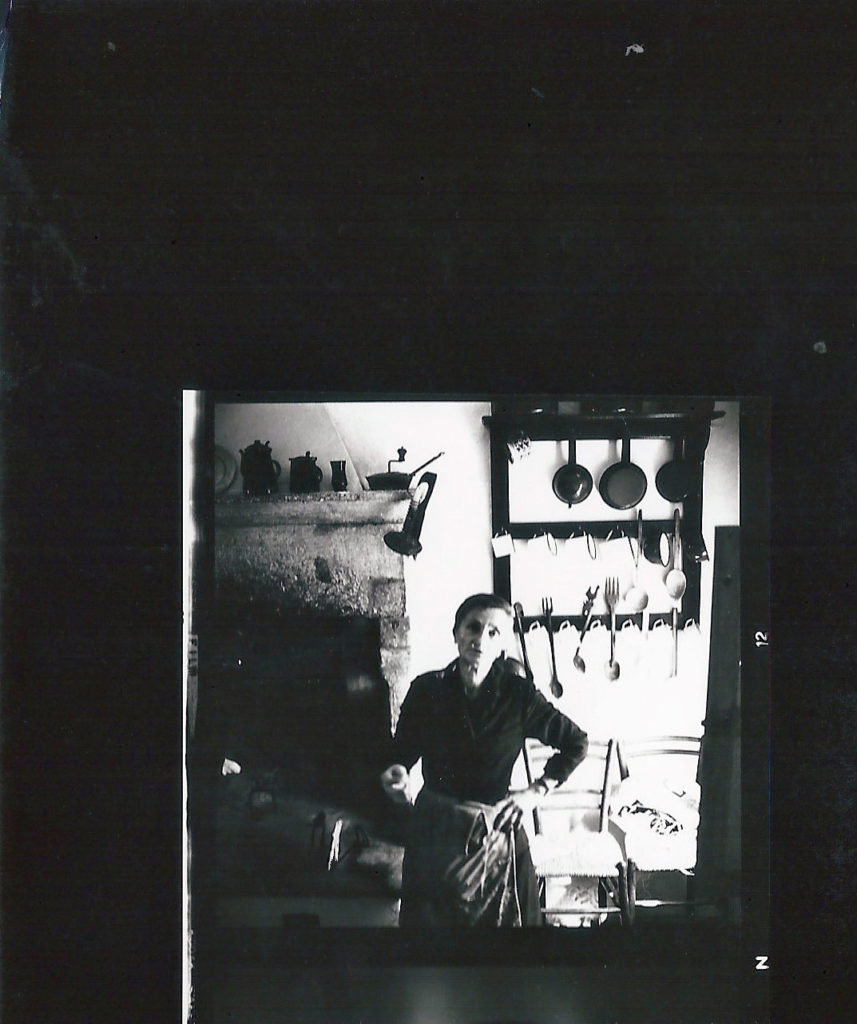
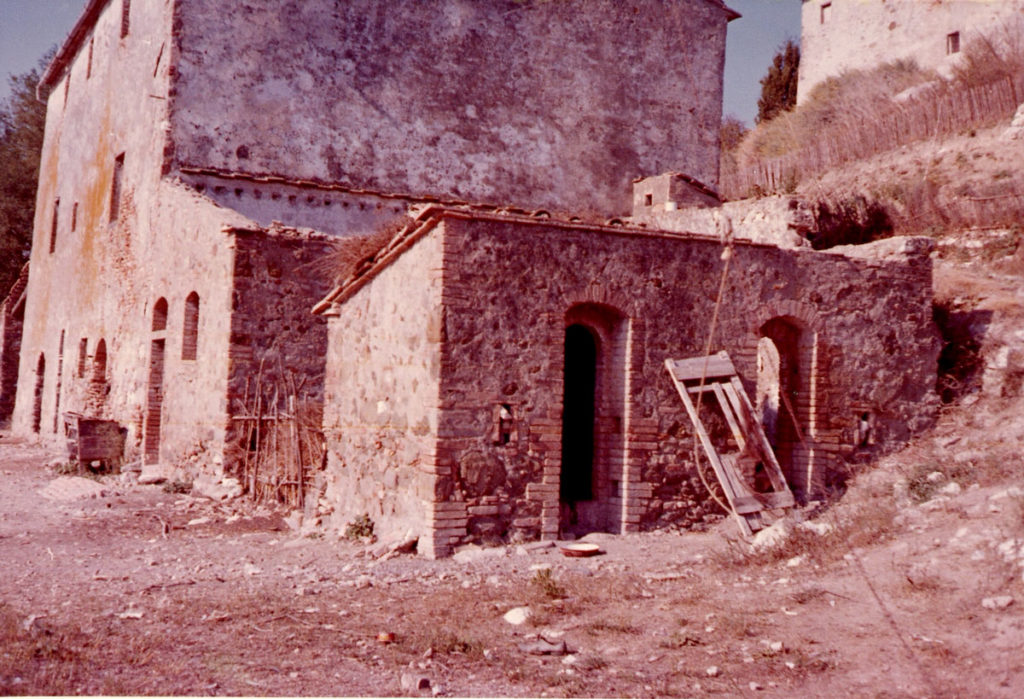
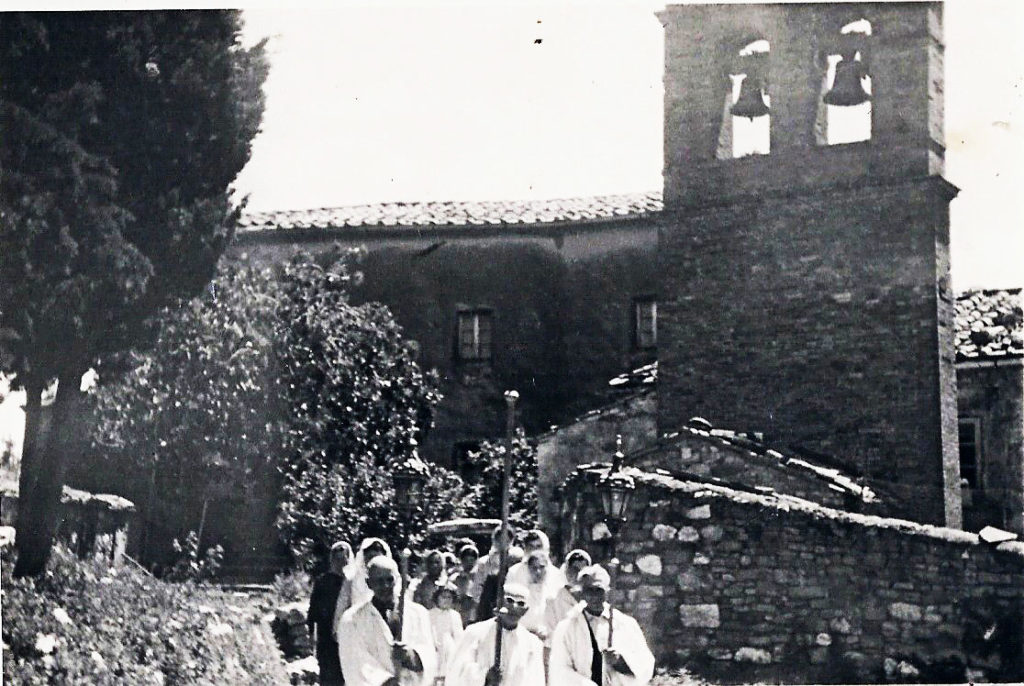
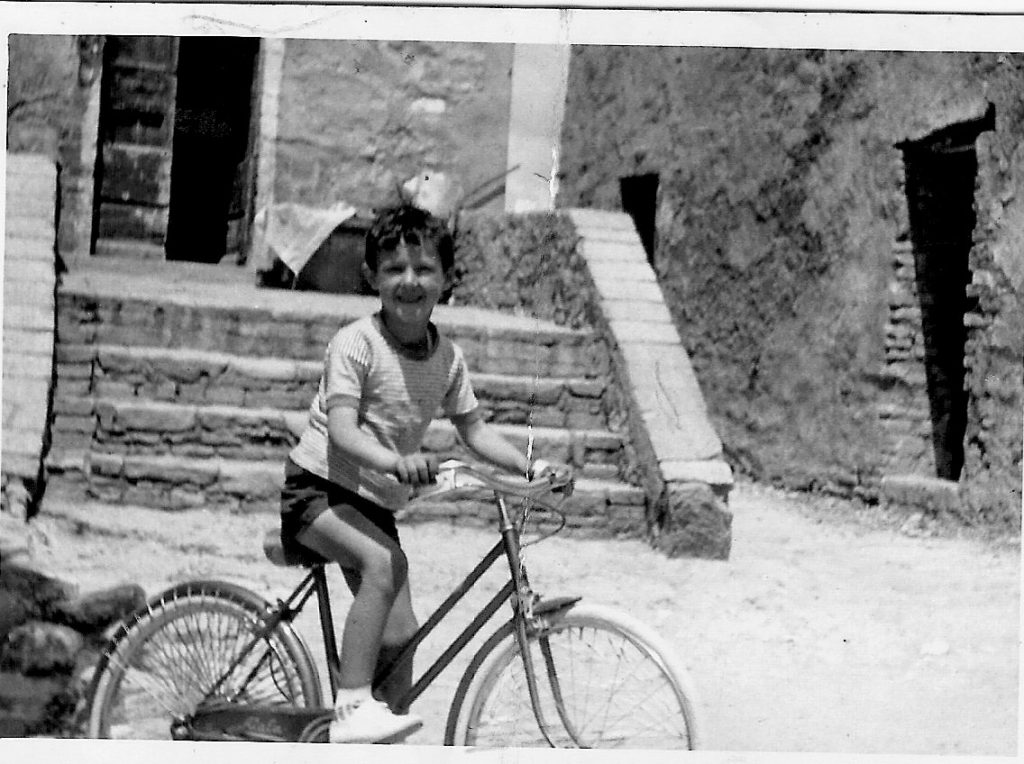
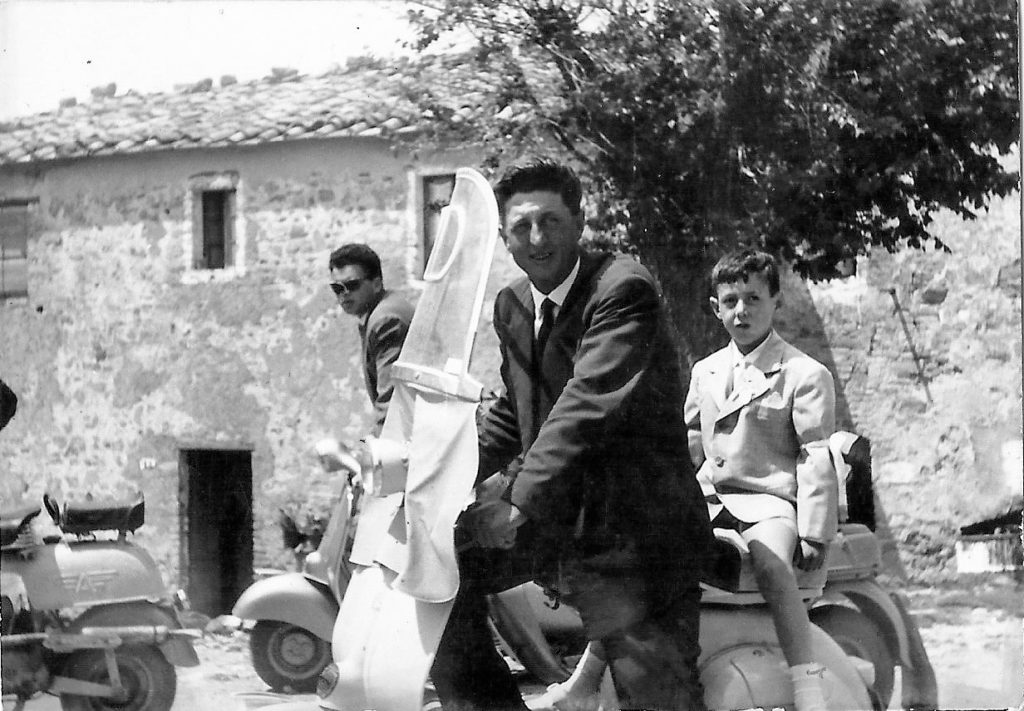
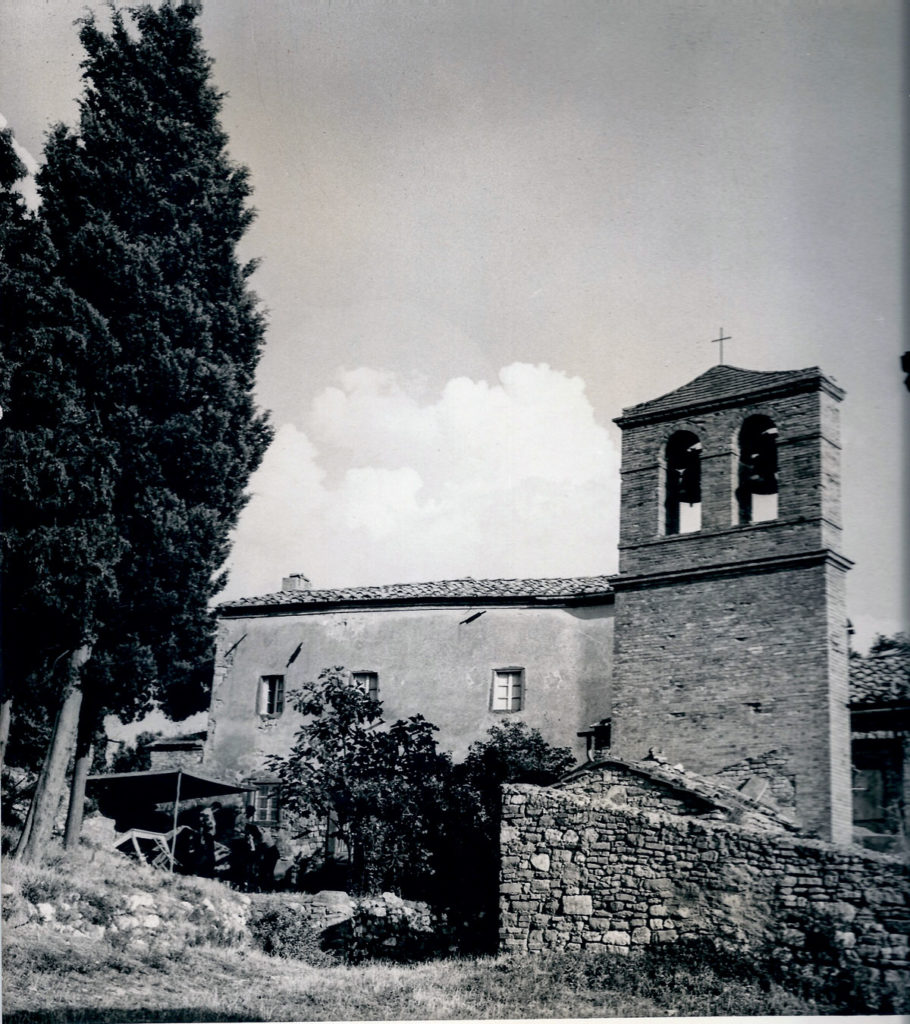
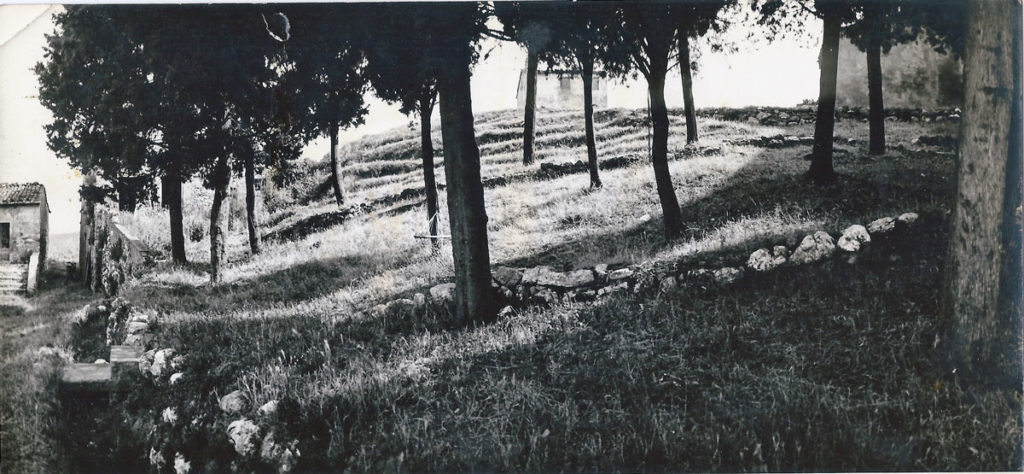
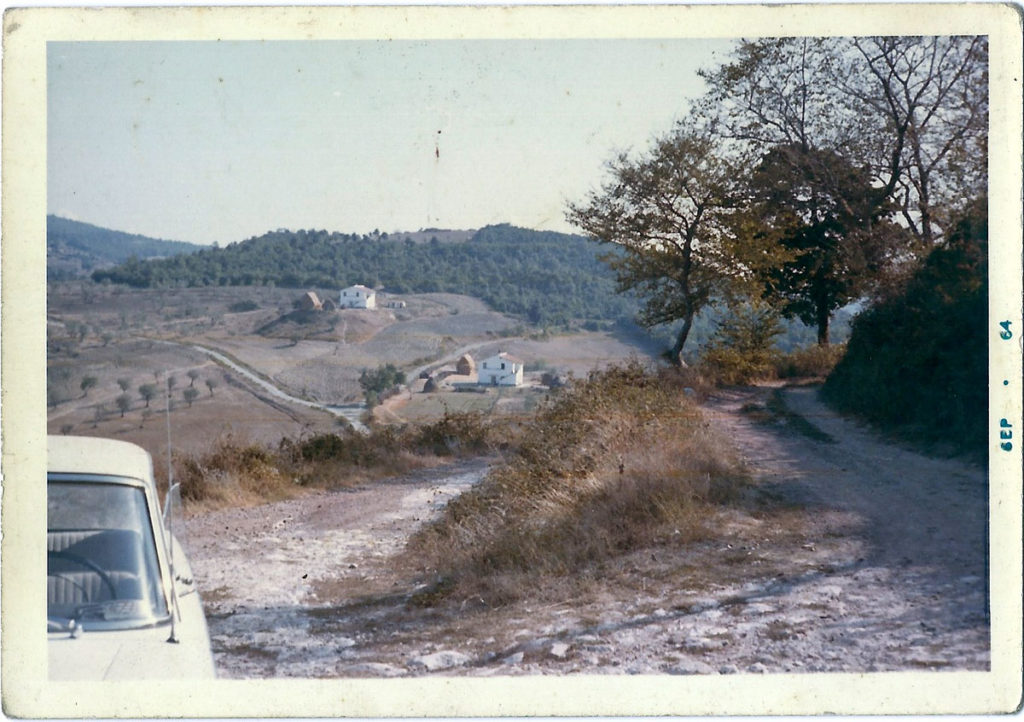
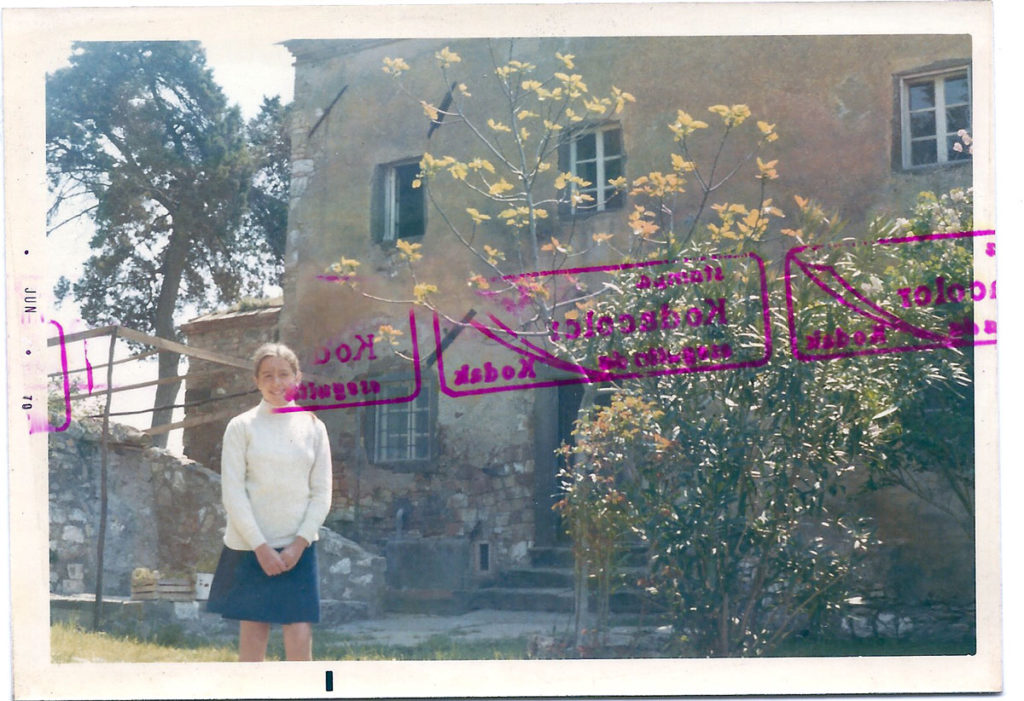
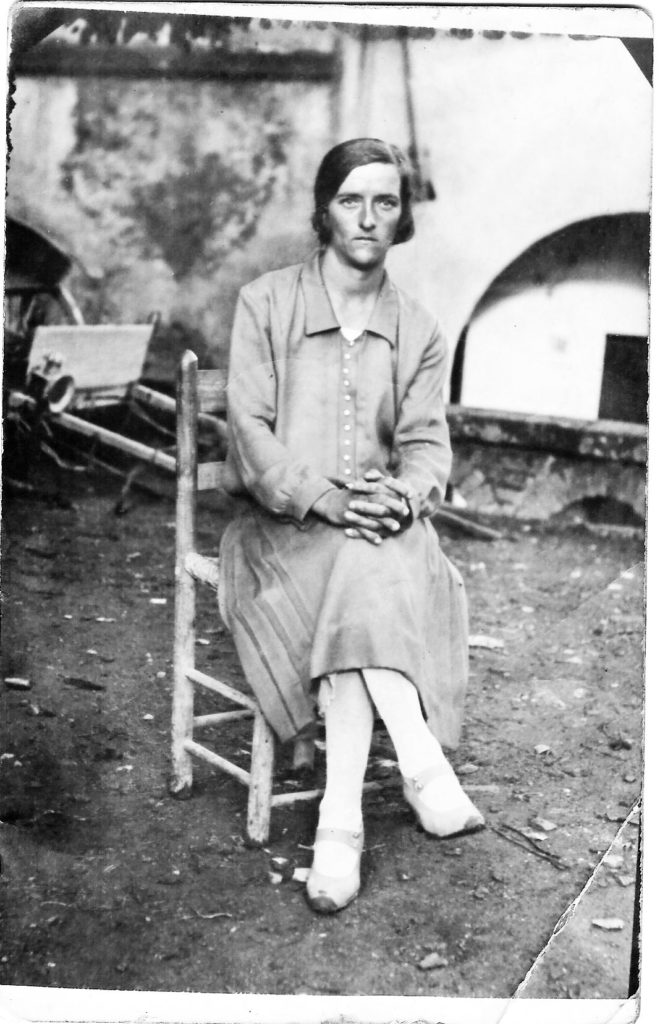
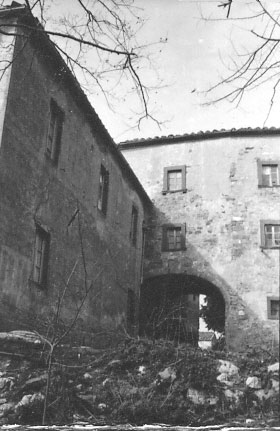
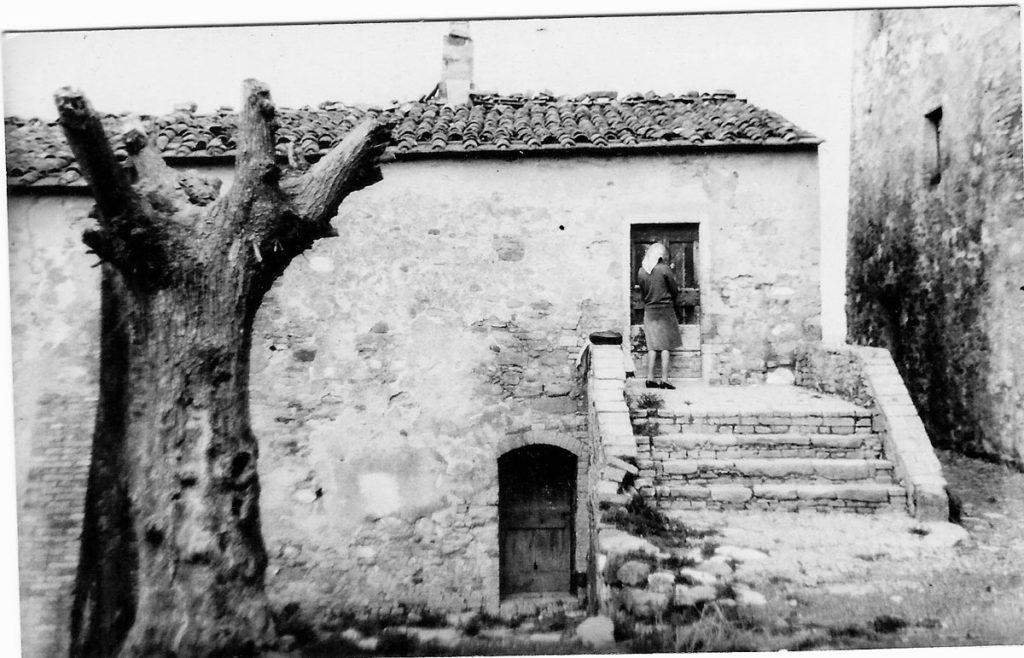
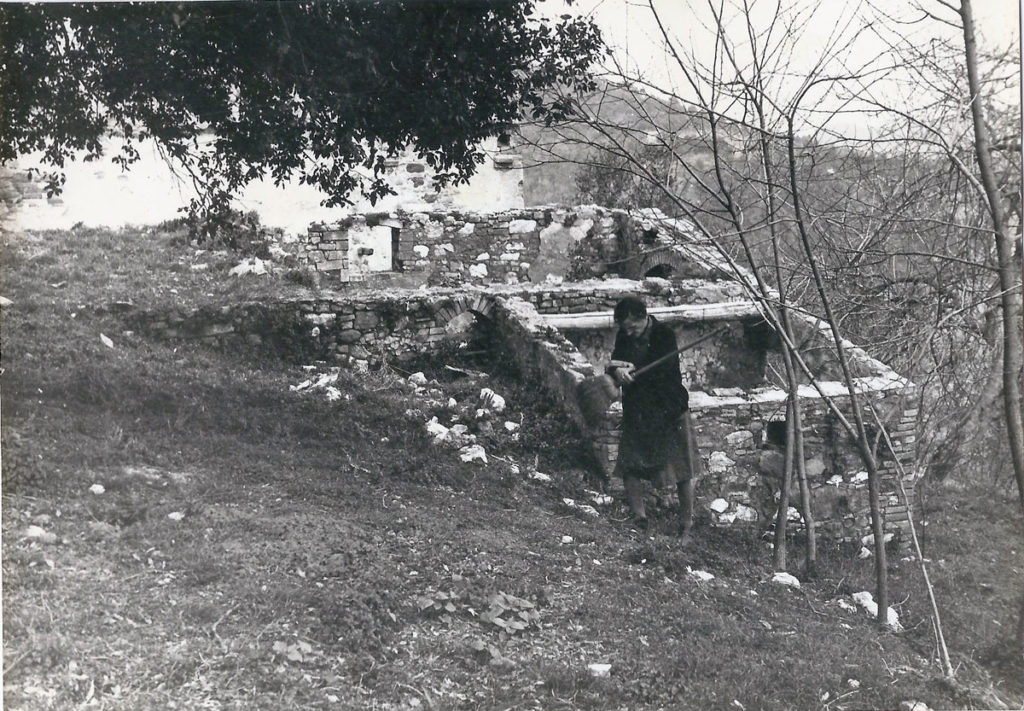
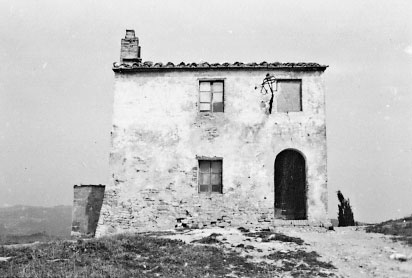
Historic photographs of Gello — the village and its houses as they were before and during restoration
Chapter VII
The library,
the family book.
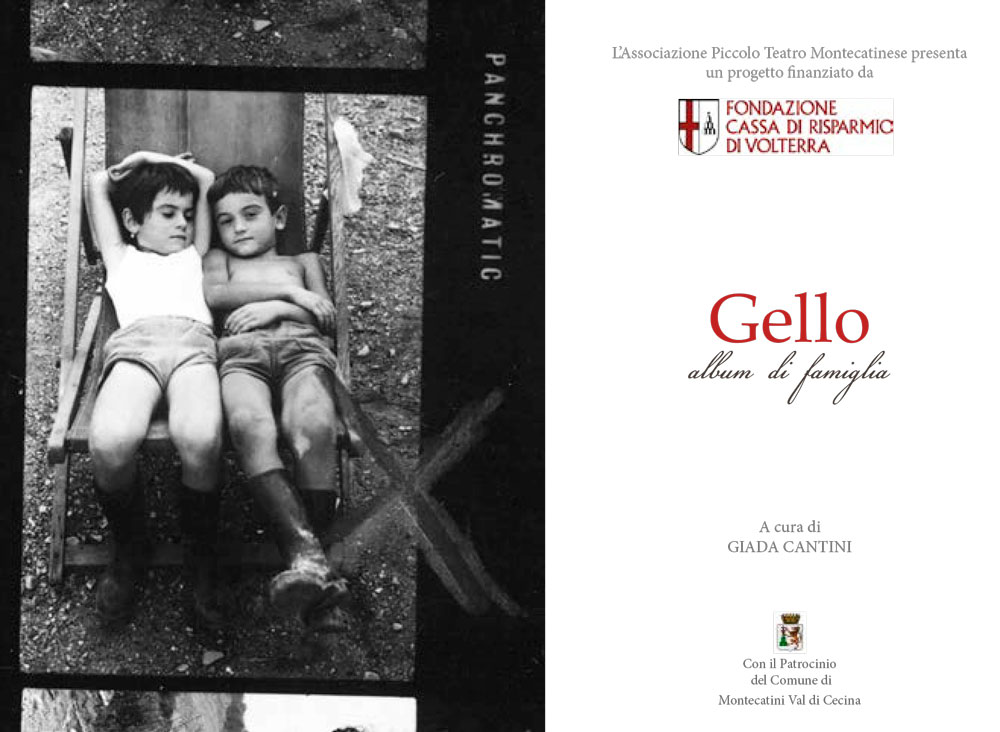
The family book
A handwritten register recording the families who lived in Gello through the 19th and 20th centuries - births, departures, the slow accounting of a community's life on a hilltop. The book is kept at the house and can be read by guests.
The free bookmark
A bookmark in the hamlet is free for all guests: take a book, leave a book. Over the years it has accumulated a small library shaped by everyone who has passed through - histories of Tuscany, novels in four languages, field guides to the Maremma, and books left behind that have themselves become part of the history of the place.
Seven houses
The story lives
in the houses.
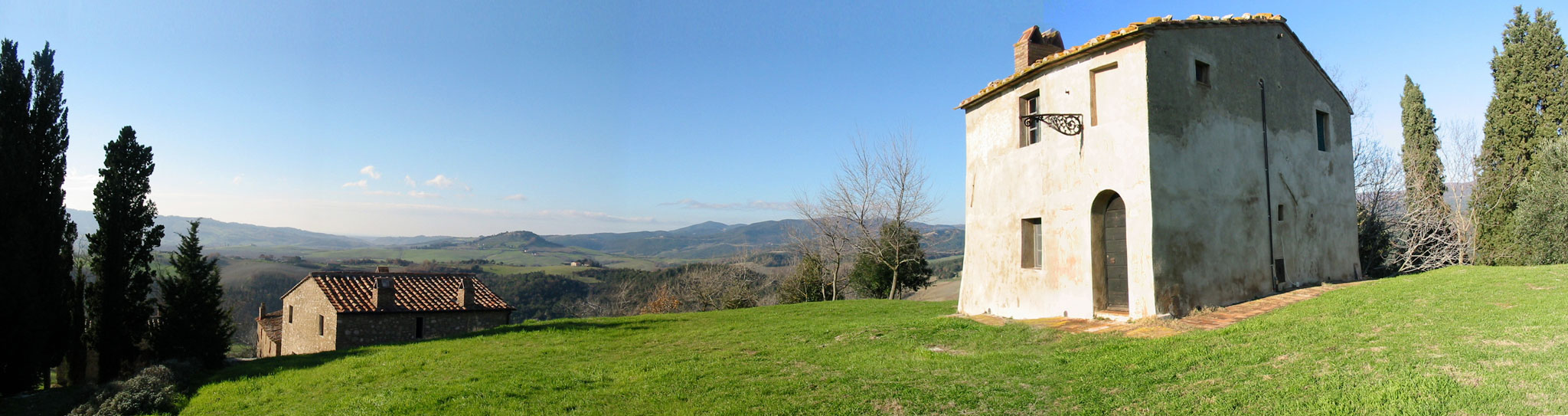
Each house has its own character, its own age, its own place in the village. These are not just rooms — they are seven distinct pieces of the same history.
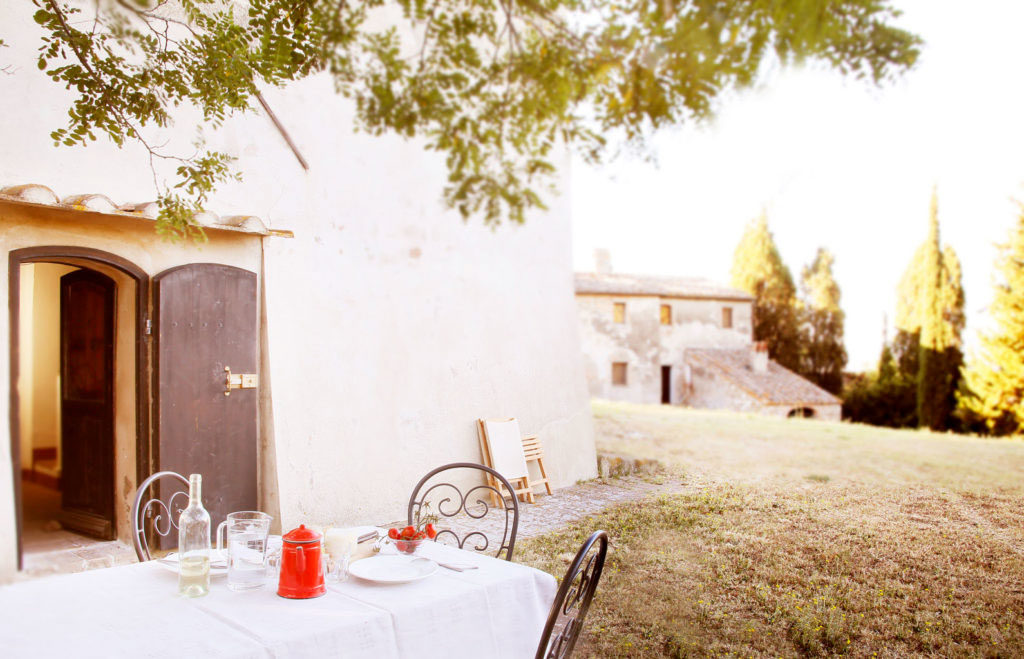
La Scuola
Until 1959, the only school for the children of Gello and the surrounding farms. The former classroom — a single vaulted room crossed by a large arch — is now the main bedroom.
Explore →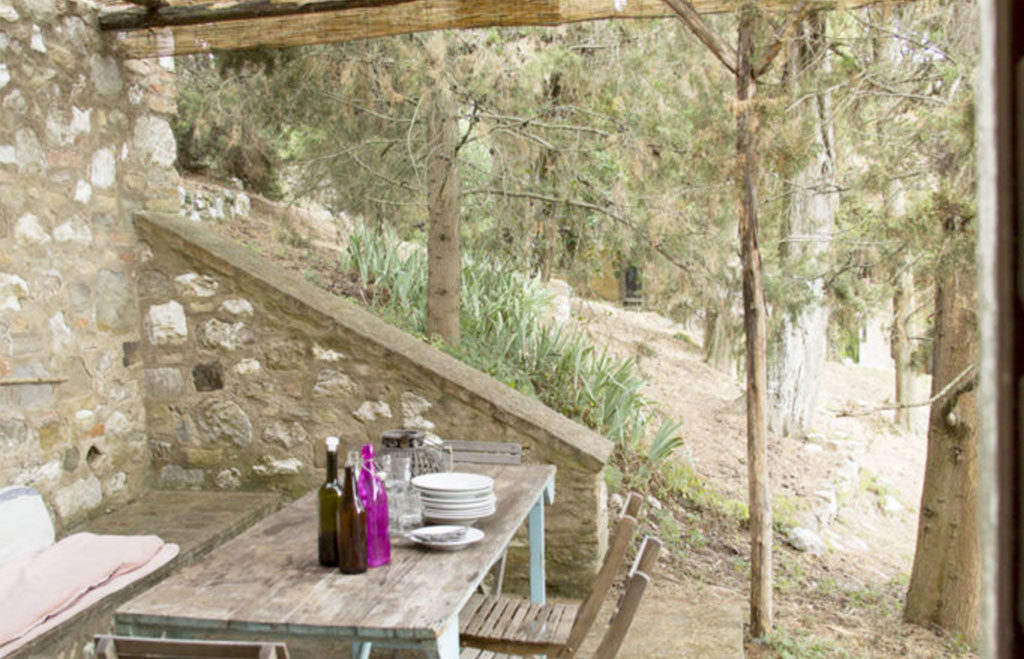
Casa delle Acque
Rebuilt stone by stone in 2003 — walls rebuilt thick, floors recovered, cypress windows milled from the family's own trees. The name is an ironic memory of a radical proposal that was never carried out.
Explore →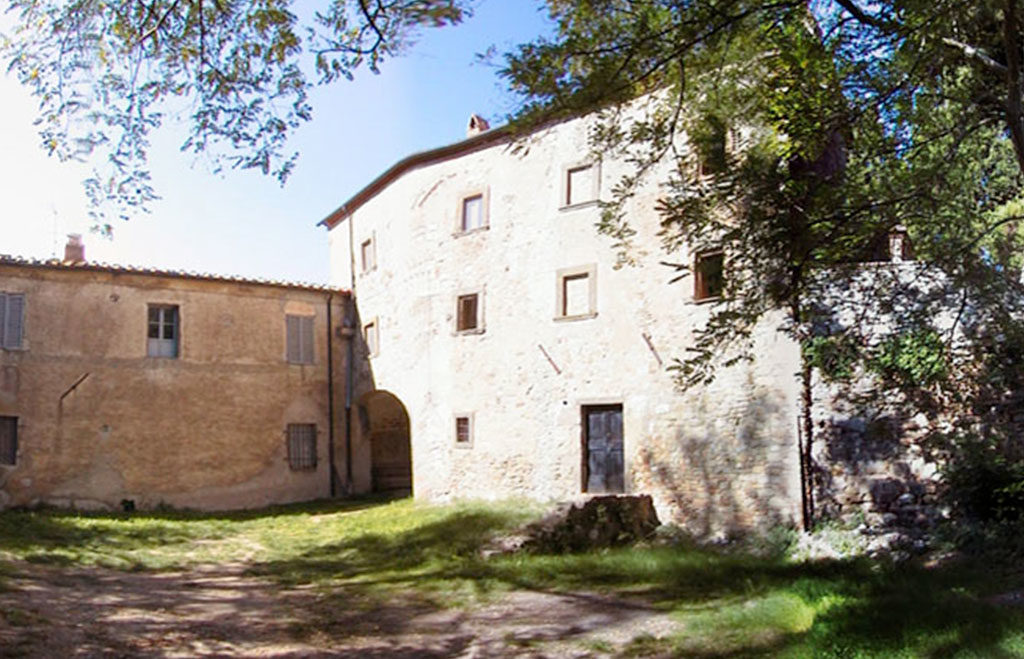
Casa dell’Arco
The oldest building in Gello. Its fireplace bears the emblem of La Rocchetta and the year 1790 — the only house with a confirmed date. Former emporium of the village.
Explore →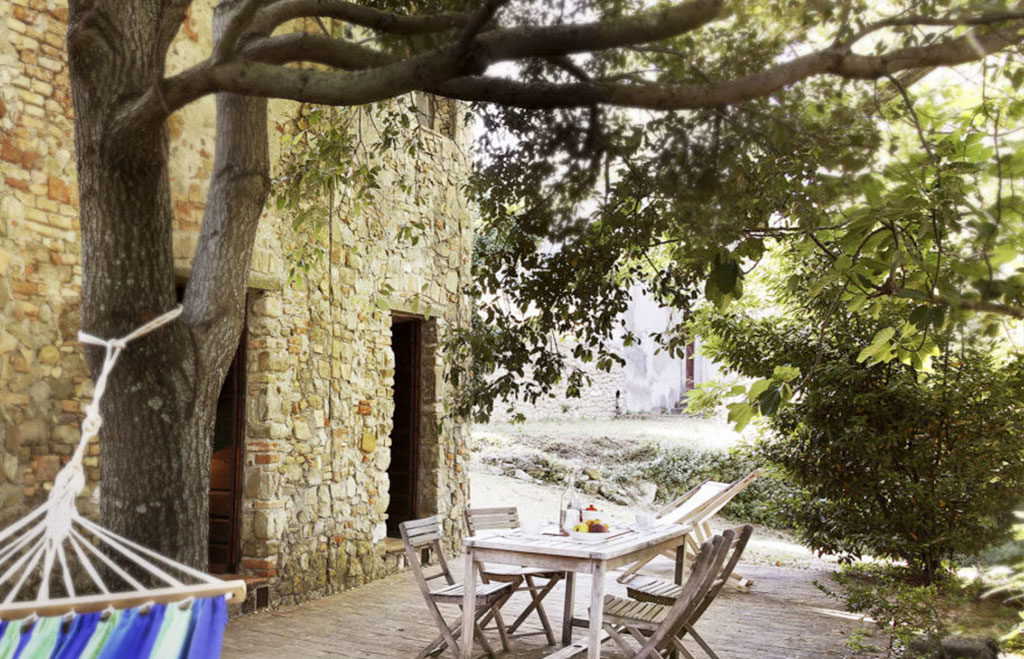
Il Sàrperi
Overlooks the central square of the hamlet, beside the old olive tree. Shaded by high acacia leaves all day — likely the coolest house in summer.
Explore →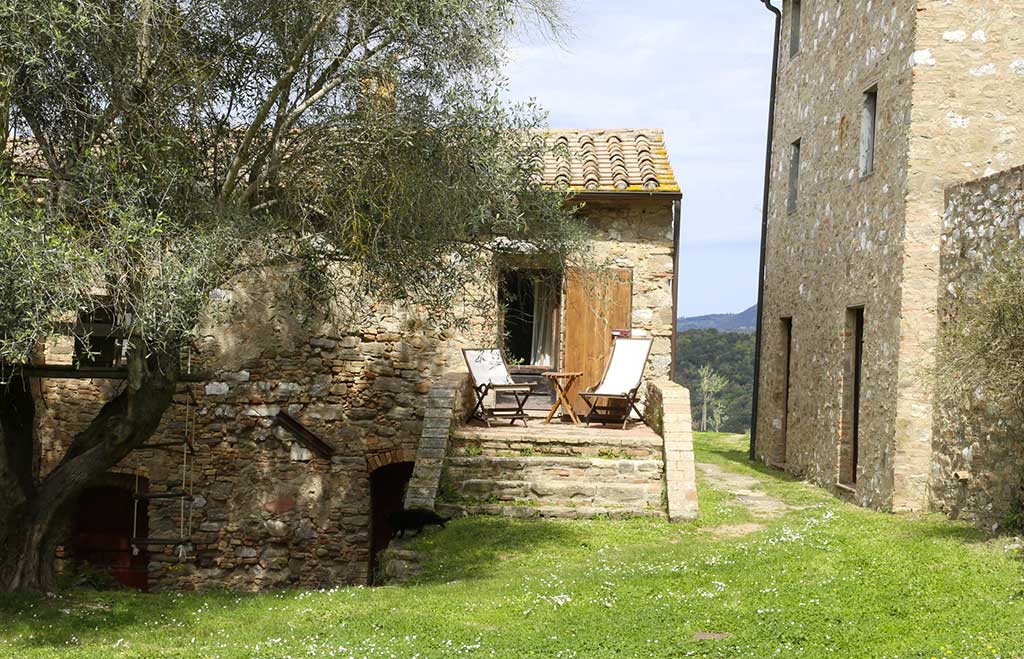
Il Simoncini Alto
Three communicating rooms on a single level, separated by one step. The large fireplace still has its original masonry stoves, once used for cooking.
Explore →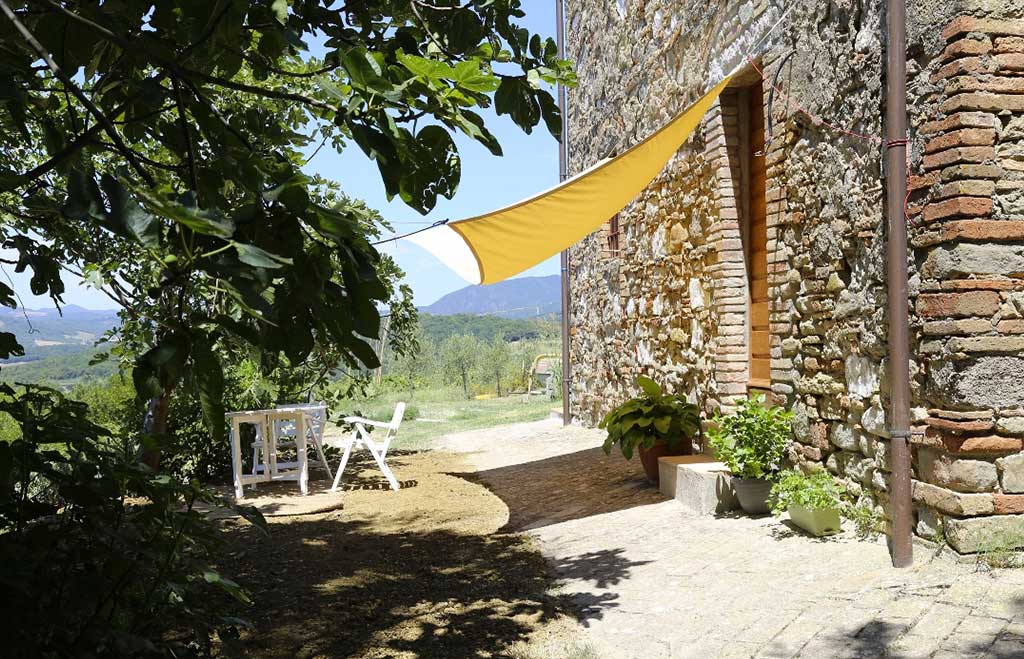
Il Simoncini Basso
On the sunset side of the village, designed for two. A private terrace shaded by wild figs stays comfortable even in the hottest hours of the day.
Explore →